Kreis 2 (Enge, Wollishofen, Leimbach – postcodes 8002, 8038, 8041). An independent guide for the first days and months.
Welcome to Zurich! We've been through this too.
This guide collects practical pointers for your first weeks in the city: registering your address, residence permits, health insurance, health care, public transport, waste, shopping, banking, school, housing, taxes, communities and free time.
Information was checked in November 2026 against the official sources listed. Wherever you read "check the official website", things may have changed: always check the source before acting. Links with the ↗ arrow lead to external websites.
First 14 days, 3 months and first year
0 of 14 done
If you turn this on, your ticks are stored only in this browser on your device and are not sent to us. They remain there until you delete them or your browser clears them. On a later visit, the option starts off again; turn it on to restore any saved ticks. You can delete saved ticks with the “Delete saved ticks” button, even if the option is off, or by clearing this website’s data in your browser settings. To stop saving and delete the saved ticks while the option is on, turn it off.
First 14 days
(Anmeldung / Zuzug) at the Personenmeldeamt within 14 days of actually arriving, in person and by appointment at Personenmeldeamt Zürich Süd, Stadthausquai 17, 8001 Zürich. Official procedure (Zuzug)
if the first free slot falls after the 14 days, the City asks you to book anyway and request an extension (Fristverlängerung).
passport or ID card (passport mandatory for third-country nationals), tenancy agreement or confirmation of accommodation, employment contract or proof of enrolment, any permit assurance, marriage certificate and children's birth certificates in the original. Municipal fee CHF 40.– per adult (as of 2026 · section 1).
transport (ZVV, zone 110), waste (Züri-Sack), a bank account if needed, school or Kita, and find out about tax at source (Quellensteuer).
Within 12 months
within 12 months of entry; after that you may not drive until the exchange is done. Licences from EU/EFTA states and some other countries (for example the USA, Canada and Japan) need no control drive; all other licences need one (CHF 134.–, as of 2026; one attempt only). Section 18 · Foreign driving licence – Canton of Zurich
: in principle no later than one year after moving your residence; in the Canton of Zurich a technical vehicle test (Fahrzeugprüfung) is part of registration. Section 17 · Section 18 · FAQ on household goods (FOCBS)
: used household goods duty-free with form 18.44 (used by you for at least 6 months; imports within 2 years are generally unproblematic). Car: proof of clearance 13.20 A, or customs permit 15.30 if used for less than 6 months. Section 17 · Moving to Switzerland – FOCBS
Fixed dates every year
: payments must be booked by 31 December; for 2026 the maximum is CHF 7'258.– if you belong to a pension fund. Pillar 3a contributions – FSIO
: a NOV application must arrive by 31 March of the following year and cannot be extended; other tax-return deadlines differ — ask the tax office. Section 15 · NOV – Canton of Zurich
Enter your arrival date and download a calendar file (.ics) with reminders to check. They are a guide, not binding legal deadlines: your deadlines depend on your situation, and the official source prevails.
Your dates are processed only in your browser to create the file; they are not sent to our server or stored by the website. If you import the file into a calendar app or a third-party service, further processing depends on that service.
Reminders to check, not binding legal deadlines. Your deadlines depend on your situation (for example permit type, start of work or the date you take up residence); the official source prevails.
🗓️ What to do this month (November–December)
Health insurance: to switch on 1 January, your cancellation must arrive by 30 November. Sample letter
Pillar 3a: payments must be booked by 31 December. Section 16
Taxes: collect this year's documents; a NOV application must arrive by 31 March. Section 15
Serafe: radio and TV fee CHF 335.– in 2026, CHF 312.– from 2027. Section 15
General reminders: the official source linked in each section always prevails.
✉️
Free templates to download
Free templates
The four short letters below are non-binding examples, written in our own words in German, with placeholders in square brackets. They are not official forms and do not replace legal or official advice. Check the current rules and addresses before you send anything.
Open the sample letters (German text, non-binding)
a) Kündigung der Grundversicherung
Translation note: a sample cancellation of compulsory health insurance (Grundversicherung), only where a change is allowed. For a switch on 1 January the letter must arrive by 30 November (the postmark is not enough; registered mail or A-Post Plus by mid-November is recommended) and you should enrol with the new insurer at the same time. You cannot switch if, by 31 December, you still have debts for which you were reminded by 30 November. An extra window exists only if you have the standard model with the ordinary deductible (CHF 300): cancellation as of 30 June, letter to arrive by 31 March. Supplementary insurance follows different contractual notice periods.
[First name Last name] [Street and number] [Postcode City]
[Name of the health insurer] [Address of the insurer]
[City], [date]
Kündigung der obligatorischen Krankenpflegeversicherung (Grundversicherung)
Sehr geehrte Damen und Herren
Hiermit kündige ich die obligatorische Krankenpflegeversicherung (Grundversicherung) für [first name last name, date of birth] auf den [date, e.g. 31 December 2026]. Bitte bestätigen Sie mir den rechtzeitigen Eingang und das Ende des Versicherungsverhältnisses schriftlich.
Freundliche Grüsse [signature] [first name last name]
Non-binding example. Adapt the text to your situation and check recipient, requirements, form and deadlines before sending. Basic insurance: your current cover ends only once the new insurer has confirmed uninterrupted cover to your current insurer. Supplementary insurance follows its own contract terms: cancel it only once new cover has been accepted.
b) Vollmacht
Translation note: a short power of attorney so that another person can carry out a specific errand at an office on your behalf. Some offices have their own form or extra requirements — ask before you go.
Vollmacht
Ich, [full name, date of birth, address], bevollmächtige hiermit [name of the authorised person, date of birth, address], mich bei [name of the office, e.g. Personenmeldeamt / Strassenverkehrsamt] in der Angelegenheit [short description, e.g. collecting a confirmation] zu vertreten und die nötigen Unterlagen entgegenzunehmen.
Diese Vollmacht gilt bis zum [date].
[City], [date]
[signature of the person granting the power] [name]
[signature of the authorised person, for acknowledgement] [name]
Non-binding example. Adapt the text to your situation and check recipient, requirements, form and deadlines before sending. State clearly who is authorised, for what and until when, and ask whether the office requires its own form. A power of attorney can be limited or revoked.
c) Gesuch um Fristerstreckung
Translation note: a short request to extend a deadline (for example for filing an ordinary tax return). Use it only where an extension is actually possible. The 31 March deadline to apply for a NOV in the Canton of Zurich cannot be extended.
[First name Last name] [Street and number] [Postcode City] [AHV number, if required]
[Name of the authority] [Address]
[City], [date]
Gesuch um Fristerstreckung – [matter, e.g. Steuererklärung [year]]
Sehr geehrte Damen und Herren
Hiermit bitte ich um Fristerstreckung für [the filing of the [year] tax return / the matter] bis zum [new date]. Grund: [short reason, e.g. recent move, documents still outstanding].
Freundliche Grüsse [signature] [first name last name]
Non-binding example. Adapt the text to your situation and check recipient, requirements, form and deadlines before sending. Name the procedure clearly. Sending a request does not mean the extension has been granted.
d) Bewerbungsschreiben für eine Wohnung
Translation note: a short German cover letter for a flat application, with placeholders. It is a non-binding example, written in our own words — not an official form and not legal advice. Attach the other documents in the dossier (see section 19 and section 10).
[Vorname Name] [Strasse und Nummer] [PLZ Ort] [Telefon] [E-Mail]
[Name der Verwaltung / der Vermieterschaft] [Adresse]
[Ort], [Datum]
Bewerbung um die Wohnung an der [Strasse Nr., PLZ Ort] – Besichtigung vom [Datum] / Inserat [Referenz]
Sehr geehrte Damen und Herren
Hiermit bewerbe ich mich um die Wohnung an der [Adresse], die ich am [Datum] besichtigt habe. Ich suche eine Wohnung in Zürich, weil [kurze Begründung, z. B. neue Arbeitsstelle / Familienzusammenführung].
Ich arbeite als [Beruf] bei [Arbeitgeber] / ich werde ab [Datum] bei [Arbeitgeber] tätig sein. Diesem Schreiben lege ich bei: [Betreibungsregisterauszug, Lohnausweis oder Arbeitsvertrag, Kopie des Ausweises oder der Aufenthaltsbewilligung, Referenzen].
Für Fragen stehe ich gerne zur Verfügung. Über eine Zusage würde ich mich sehr freuen.
Non-binding example. Adapt the text to your situation and check recipient, requirements, form and deadlines before sending. Include only the data that is needed; you decide which attachments to send.
In a life-threatening emergency call 144. Medical and dental out-of-hours service: Aerztefon 0800 33 66 55 (details in section 4).
Last checked: November 2026
📋1
Anmeldung (registering your address)
Coming from abroad, register in person within 14 days of arriving at Personenmeldeamt Zürich Süd, Stadthausquai 17, by appointment. The municipal fee is CHF 40.– per adult; bring your passport or ID, your tenancy agreement and your employment contract. (as of 2026 · sources)
WherePeople arriving from abroad register in person at Personenmeldeamt Zürich Süd, Stadthausquai 17 (Stadthaus), 8001 Zürich, by appointment. If a family registers, all members must attend.
Note: since June 2023 the old Kreisbüro offices no longer exist. There are three Personenmeldeamt counters (Süd at the Stadthaus, Nord in Oerlikon, West) open to everyone, but for Zuzug from abroad the City explicitly points to Zürich Süd.
From another Swiss municipalityReport within 14 days. If your previous municipality participates you can use the national eUmzugCH portal; otherwise attend one of the three counters by appointment, after deregistering in the previous municipality.
DeadlineWithin 14 days of actually moving. You cannot register before you have taken up accommodation in the city.
Documents (arriving from abroad, City list)
passport or ID card (passport mandatory for third-country nationals);
tenancy agreement, Wohnungsausweis, Untermietvertrag or Einzugsanzeige;
any Zusicherung der Aufenthaltsbewilligung or Ermächtigung der Visumserteilung;
employment contract or proof of enrolment;
CHF 40.– municipal fee per adult;
for foreign nationals, Migrationsamt fees depending on permit type: check current amounts on the official website;
marriage certificate in the original (if both spouses register);
children's birth certificates in the original (if children register).
Civil status documents not in an official Swiss language or English must be presented in the original with an official translation.
Your permit type depends mainly on your work contract: B for 12 months or more, L for less than 12 months, G for cross-border commuters living in an EU/EFTA state. Requirements vary by nationality, so check the official website.
B (Aufenthaltsbewilligung): generally for work lasting at least 12 months or of indefinite duration. For EU/EFTA nationals the federal sources indicate several years (often 5): check current details.
L (Kurzaufenthaltsbewilligung): work lasting less than 12 months.
G (Grenzgängerbewilligung): for people living in an EU/EFTA state, working in Switzerland and returning home at least once a week.
Requirements and durations depend on nationality, contract and family situation. Always check the official website.
Settlement permit C (Niederlassungsbewilligung): what it takes
The C permit is open-ended and may not be tied to conditions. Summary for residents of the City of Zurich:
When: as a rule after 10 years in Switzerland, the last 5 without interruption on a B permit. After 5 years: citizens of countries with a settlement agreement or treaty (list on zh.ch, e.g. Germany, France, Italy, Austria, Spain, Portugal, the UK, the USA, Canada), spouses of Swiss citizens or of C-permit holders, and – as early issuance – people who are successfully integrated. Temporary stays (studies, internships) usually do not count.
German (Canton of Zurich): at least A2 spoken and A1 written; for early issuance after 5 years B1 spoken and A1 written. Nationals of Germany, Austria and Liechtenstein are exempt. Accepted proof: e.g. fide, telc, Goethe, ÖSD, SDS, TestDaF, KDE, or at least 3 years of compulsory school, an upper-secondary or university qualification in German. Early issuance also requires the other legal conditions to be met, in particular integration and the required period of stay (Art. 62 VZAE/OASA).
Integration (Art. 58a AIG): respect for public security and order, respect for the values of the Federal Constitution, language skills, and taking part in working life or education. There must be no grounds for revocation (e.g. serious offences, long-term dependence on social assistance).
Documents: valid passport, a current detailed debt-collection register extract (Betreibungsregisterauszug incl. Verlustscheine) for every place you lived in the last 3 years (original, not returned), confirmations from the social-assistance offices for the last 3 years, and your language certificate. The Migrationsamt obtains the criminal record extract itself.
Fees: the fee for issuing the C permit is normally CHF 95. For unmarried children under 18 it is CHF 30 under the EU/EFTA rules and CHF 40 under the AIG (Foreign Nationals and Integration Act). Costs for the card, biometric data or photo, postage and register extracts may be added. Check the amount that applies to you with the Migrationsamt (fee schedule LS 142.21).
Where: book an appointment and apply in person at Personenmeldeamt Zürich Nord or Zürich West (there is no special C form; ideally together with your B renewal). The Migrationsamt des Kantons Zürich (Berninastrasse 45, 8090 Zürich) decides; this can take several weeks.
The C permit itself has no end date, but the card is checked every 5 years and the permit can be revoked or downgraded to B.
Last checked: 20 November 2026. Simplified summary, not legal advice: the rules depend on nationality and personal situation. Always check with the Migrationsamt before you apply.
Swiss citizenship: ordinary and facilitated naturalisation
These are two different procedures: in ordinary naturalisation the commune, the canton and the Confederation are all involved; facilitated naturalisation is decided by the SEM after consulting the canton. The requirements, including the length of residence, depend on the type of application. Switzerland allows dual citizenship, but some countries do not – check with your home country first.
Ordinary naturalisation (most newcomers)
Federal minimum: a valid C permit and 10 years of residence in Switzerland, 3 of them in the 5 years before you apply. Years between your 8th and 18th birthday count double, but you need at least 6 years of actual residence. Years on B or C count fully, on F half, on N or L not at all.
City/Canton of Zurich: at least 2 years living in the City of Zurich before you apply (under 25: 2 years in the canton). No relevant criminal record or open proceedings, no unpaid debt-collection entries in the last 5 years, no social assistance in the last 3 years (exceptions, e.g. fully repaid), and you can cover your living costs or are in education. The 2 years must immediately precede your application, and your age counts on the day you file it (§ 5 KBüV, LS 141.1); all other requirements still apply.
Integration and language: respect for the values of the Federal Constitution, taking part in social life and supporting your family's integration. German at least B1 spoken and A2 written (federal minimum, Art. 6 BüV; Zurich asks the same).
Basic knowledge test (Grundkenntnistest): geography, politics, history and society of Switzerland, the canton and Zurich's communes. In the City of Zurich it takes place at the Stadthaus, is free and comes after you apply; exempt if you did at least 5 years of compulsory school in Switzerland (3 at lower-secondary level) or finished upper-secondary education here.
How: first get an extract from the Swiss civil-status register (max. 6 months old). Then apply online to the Gemeindeamt des Kantons Zürich (Zürikonto/AGOV login). Steps: canton pre-check → City of Zurich checks (possibly an interview) and grants city citizenship → canton citizenship → SEM federal approval → Swiss citizenship. It takes about 2 years. Moving within the city is always possible; to another commune only after the city has finished its check.
Fees: City of Zurich CHF 500 per foreign applicant (free if you are not yet 25 when you apply; it can be reduced or waived in the cases provided for), Canton CHF 500 (CHF 250 under 25, free under 20), Confederation CHF 100 per adult (CHF 150 for spouses filing a joint application; minor children included in a parent's application pay no separate SEM fee, Art. 25 BüV). City, canton and federal fees are charged separately. Plus the register extract and, if needed, the language test.
Facilitated naturalisation (erleichterte Einbürgerung, decided by SEM)
Spouses of Swiss citizens: at least 3 years of genuine and stable marital union with your Swiss spouse, which must continue until the decision, and 5 years of residence in Switzerland in total, including the year just before you apply (Art. 21 BüG). If your spouse became Swiss after the wedding, the facilitated route applies only in the cases set out in the law. A C permit is not required.
Third generation (Art. 24a BüG): born in Switzerland, under 25, C permit and at least 5 years of compulsory school here; one parent had a C permit, lived here 10 years and did 5 years of compulsory school; one grandparent was born here or had a right of residence. Other cases: children of naturalised parents (under 22, not included in the application) and stateless children.
Same integration rules (incl. a national language, B1 spoken / A2 written). You send the application by post to the SEM (the City of Zurich sends you the form free on request); the city checks your integration in an interview; about 2 years. Fees for a spouse living in Switzerland: CHF 500 for the SEM decision plus up to CHF 400 for the canton's report (collected by the SEM), so up to CHF 900, not counting documents and other costs. Other facilitated routes: CHF 500 for adults, CHF 250 for minors, plus the report if any (up to CHF 400); a minor child included in a parent's application pays no SEM fee of its own.
Registered partners of Swiss citizens cannot use the facilitated route, but get shorter ordinary residence periods (5 years in Switzerland incl. 1 before applying, 3 years of partnership).
Last checked: 20 November 2026. General information, not legal advice: the rules change and your case may differ. Use the canton's free self-check and always check with the competent office (Stadtkanzlei / Gemeindeamt / SEM) before you apply.
Everyone resident in Switzerland must take out basic health insurance within 3 months; if you meet the deadline, cover is backdated to your arrival. Compare premiums on the official Priminfo tool; the standard adult deductible is CHF 300.– a year. (as of 2026 · sources)
RuleIt is individual and compulsory for everyone resident in Switzerland: adults and children are insured separately, there is no "family" policy.
DeadlineWithin 3 months of taking up residence (Wohnsitznahme). If you meet the deadline, coverage and premiums start from your arrival date; if you are late without good reason, coverage starts at registration and a surcharge may apply.
ComparisonThe only official and neutral Confederation comparison tool is Priminfo: it compares premiums for the Zurich tariff region by deductible and model. The standard minimum deductible for adults is CHF 300.– per year; higher Wahlfranchisen should be assessed on the FOPH website.
In a life-threatening emergency call 144; for out-of-hours medical or dental advice call Aerztefon, free on 0800 33 66 55. The emergency department of Universitätsspital Zürich, Schmelzbergstrasse 8, is open 24/7.
In the Canton of Zurich Aerztefon, free number 0800 33 66 55, 24/7 advice for non-life-threatening emergencies, including dental. zuerich.com also lists +41 44 421 21 21: if in doubt use 0800 or check the official website.
Emergency department near Kreis 2
Universitätsspital Zürich (USZ), Notfall entrance at Schmelzbergstrasse 8, 8091 Zürich, open 24/7. Note: Rämistrasse 100 is the hospital's main entrance, not the emergency department. In a life-threatening emergency call 144 and check current entrances and directions on the hospital website.
Pharmacies in Kreis 2
Hours checked in November 2026: check the website before you go.
Medbase Apotheke Zürich Enge, Tessinerplatz 12, 8002 Zürich – listed as open every day, Mon–Fri around 07:00–20:00, Sat and Sun around 09:00–19:00 (check current hours).
TopPharm Morgental Apotheke, Albisstrasse 44, 8038 Zürich – listed as open Mon–Fri around 08:00–19:00, Sat around 08:00–17:00, closed on Sundays (check current hours).
The whole city is fare zone 110; a personal adult NetzPass for zones 1–2 costs CHF 88.– a month or CHF 813.– a year (2nd class, November 2026). Check zvv.ch for lines, times and tariff changes. (as of 2026 · sources)
SystemZurich works with fare zones. The whole city is zone 110; for passes the urban area counts as "1–2 Zonen".
PricesZVV data at the time of checking (November 2026), 2nd class, adults, personal NetzPass for 1–2 zones: CHF 88.– per month and CHF 813.– per year, loaded onto the SwissPass. Check the ZVV website for tariff updates.
HalbtaxNational SBB/FSS pass that halves many single tickets, day passes and train journeys. Details and prices on the SBB page.
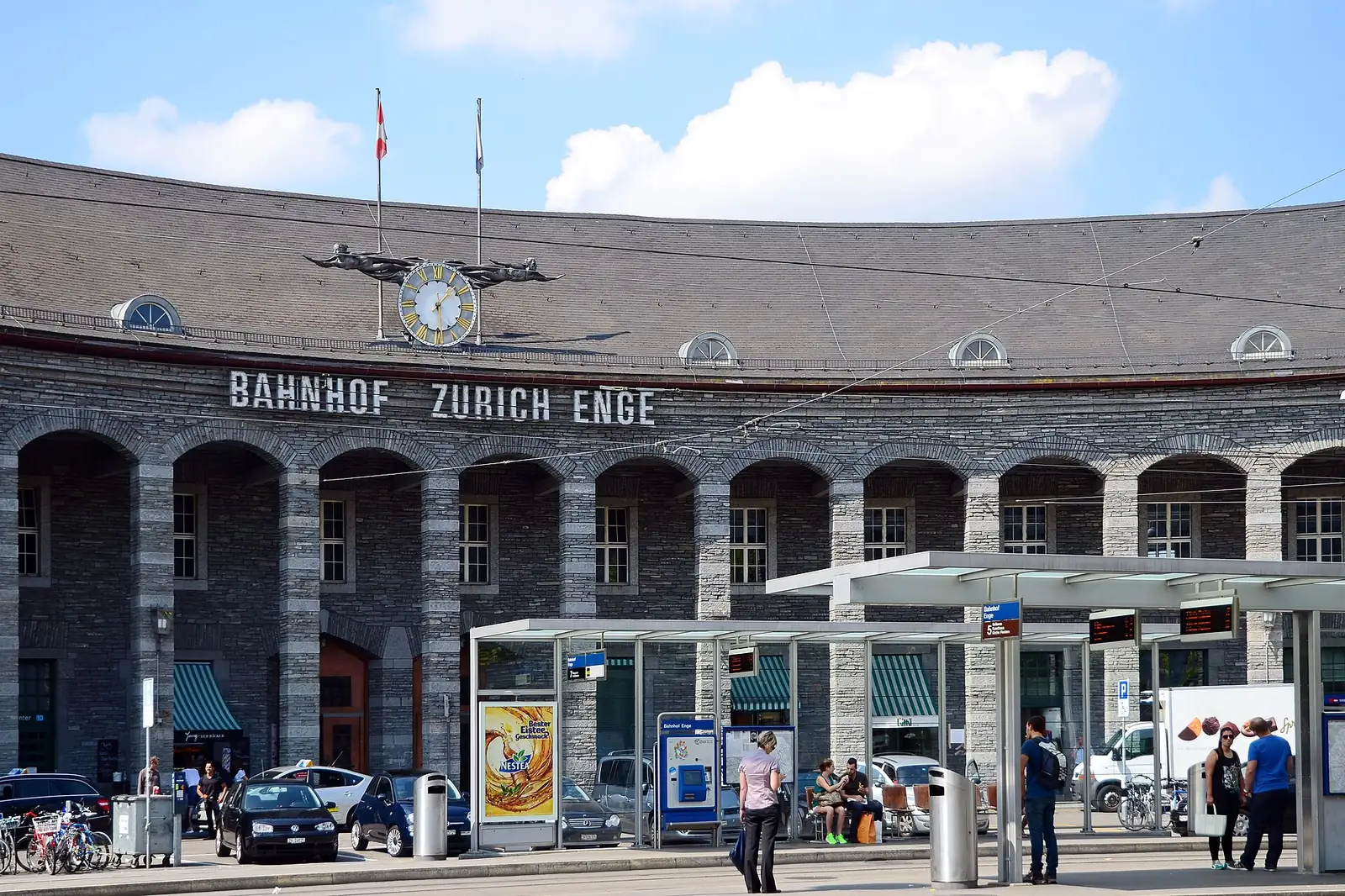
Stops in Kreis 2Zürich Enge station (Tessinerplatz) and Zürich Wollishofen station. For lines, times and disruptions use zvv.ch or sbb.ch: do not rely on a fixed list of line numbers.
Household waste is collected only in the official blue Züri-Sack bags. The City's ERZ app shows the collection calendar and recycling points for your address.
Züri-SackHousehold waste (Hauskehricht) goes only in the official blue Züri-Sack bags, sold in many shops. The price includes the waste fee, production costs and the retailer's margin: the counter price can vary. Without the official bag, waste is not collected.
CollectionsGeneral guidance, to be verified for the days and points at your address: paper and cardboard according to the calendar; glass, metal and textiles at neighbourhood Sammelstellen; PET and plastic bottles usually at supermarkets.
Official appERZ Entsorgung + Recycling Zürich (iOS/Android): collection calendar and recycling point map for your address.
Many neighbourhood shops are closed on Sundays, but supermarkets inside Zürich HB (ShopVille) open, for example Coop around 08:00–22:30 and Migros around 07:00–22:30. Check the hours before you go.
WeekdaysIn Kreis 2 there are supermarkets around Tessinerplatz / Zürich Enge station, Wollishofen (Morgental) and Leimbach. Neighbourhood shop hours vary: check each time.
Sundays and holidaysMany neighbourhood shops are closed. At Zürich Enge station several shops are listed as open every day of the year (check the hours). Inside the main station Zürich HB (ShopVille) several supermarkets and shops also open on Sundays. Hours shown on the SBB listings when checked (November 2026; check before you go):
Coop (Halle Löwenstrasse, ShopVille): Sundays around 08:00–22:30.
Migros (Halle Landesmuseum, ShopVille): Sundays around 07:00–22:30.
Banks usually ask for an ID document and proof of address or permit, often also an employment contract or Meldebestätigung. Swisscom, Sunrise and Salt run their own mobile networks; check conditions with each provider.
Show all detailsHide details
AccountPractical guidance, not a binding list: banks usually ask for an ID document and proof of address or permit, often also an employment contract or Meldebestätigung. Requirements vary between institutions: check with the bank. Examples in the city: UBS, Zürcher Kantonalbank (ZKB), PostFinance, digital banks; this is not a recommendation.
MobileThe three providers with their own network are Swisscom, Sunrise and Salt (virtual providers also exist). You normally need an ID and a Swiss address; for fibre you may need the socket's OTO number. Check coverage and conditions on the provider's website.
We do not list prices or offers here: they change often and must be checked with the chosen bank or provider.
Last checked: November 2026
🎒9
School, Kita and childcare
Children who turn 4 by 31 July usually start Kindergarten in August, and Kreis 2 belongs to Schulkreis Uto (together with part of Kreis 3). Enrolment goes through the City's official channels; the exact school depends on your address.
Show all detailsHide details
Compulsory schoolAs a rule Kindergarten starts in August for children who turn 4 by 31 July and lasts 2 years, followed by Primarschule.
Kreis 2 belongs to Schulkreis Uto, which covers Enge, Wollishofen and Leimbach as well as Friesenberg and Alt-Wiedikon (Kreis 3). The exact assignment depends on your address: check the City and school websites.
Enrolment goes through the City's official channels (Kreisschulbehörde). Check the current procedure.
KitaThere are municipal and private centres; resident families can ask the City's services about places and subsidies.
More on family allowances, paediatricians, parent counselling and subsidised childcare: section 14.
Finding a flat: deposit, dossier and Betreibungsauszug
After a viewing, landlords usually ask for a dossier with ID or permit, proof of income and a Betreibungsregisterauszug (CHF 17.– plus postage). The deposit may not exceed three months' rent and goes into a blocked account in your name. (as of 2026 · sources)
The rental market is very competitive. After a viewing, landlords usually ask for a dossier with a completed form, ID or permit, proof of income and the debt enforcement extract. The exact documents depend on the listing: this is not a legally required list.
BetreibungsregisterauszugOfficial certificate of debt enforcement proceedings over the past five years. A standard extract costs CHF 17.– plus postage according to the City. You can request it online, by post or at the office responsible for your address (in the City of Zurich this depends on the Kreis). Newcomers may receive an extract limited to their period of residence.
DepositFor housing, by law it may not exceed three monthly rents and must be paid into a blocked account in the tenant's name.
Official figures on the housing shortage, a sample cover letter and help with tenancy disputes: section 19.
With a B or L permit you are generally taxed at source: your employer deducts the tax every month. From a gross annual income of CHF 120'000.–, a subsequent ordinary assessment (NOV) usually applies. (as of 2026 · sources)
People resident in the Canton of Zurich with a B or L permit who are not married to a Swiss citizen or a C-permit holder are generally subject to tax at source: the employer deducts the tax each month based on income, marital status, children and denomination. Check your situation on the canton's website.
If gross annual income reaches at least CHF 120'000.–, a subsequent ordinary assessment (NOV) usually applies. Other income or assets can also change your obligations: check the official website.
More on the subsequent ordinary assessment (NOV), the radio and TV fee (Serafe) and private insurance: section 15.
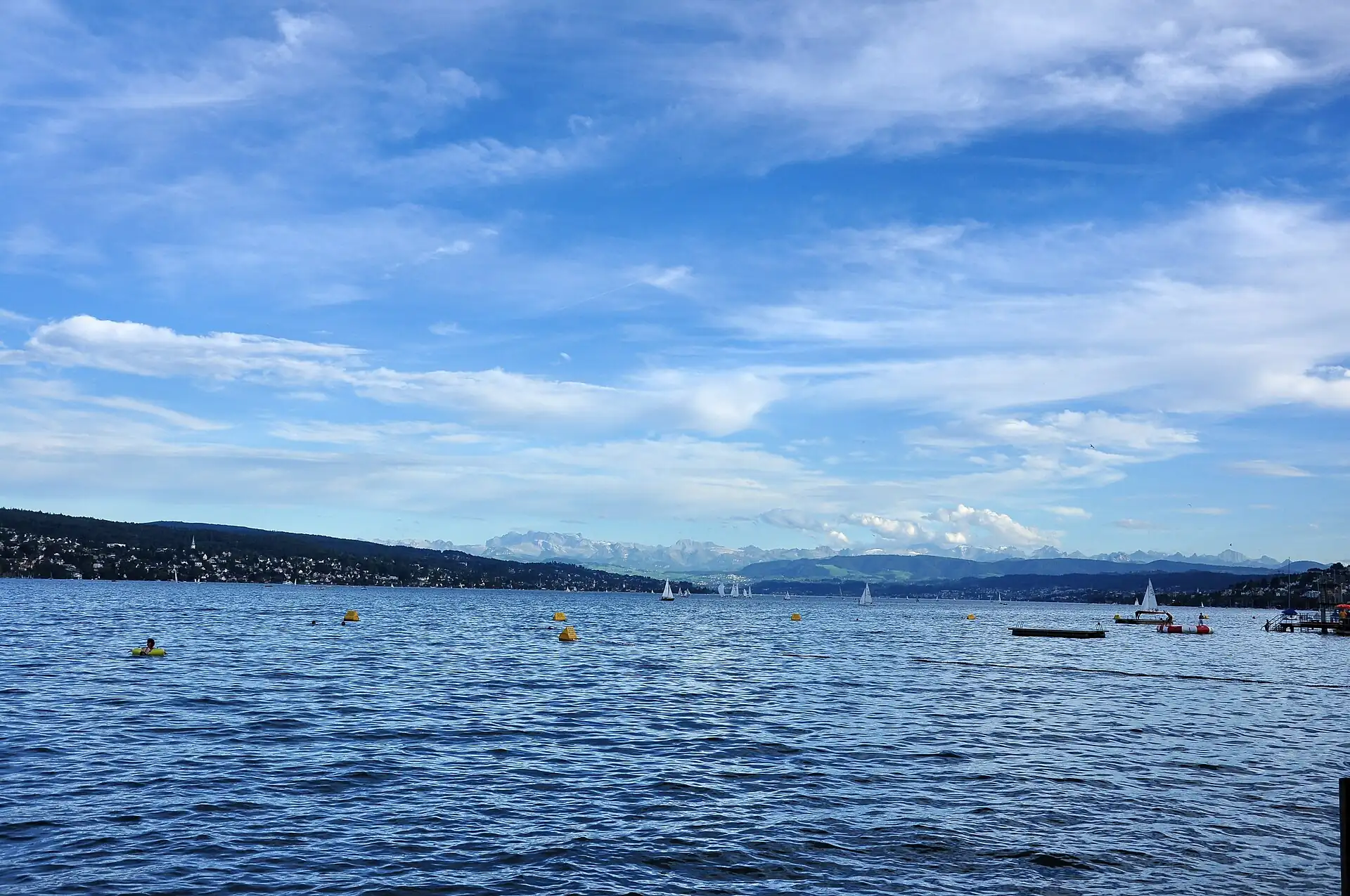
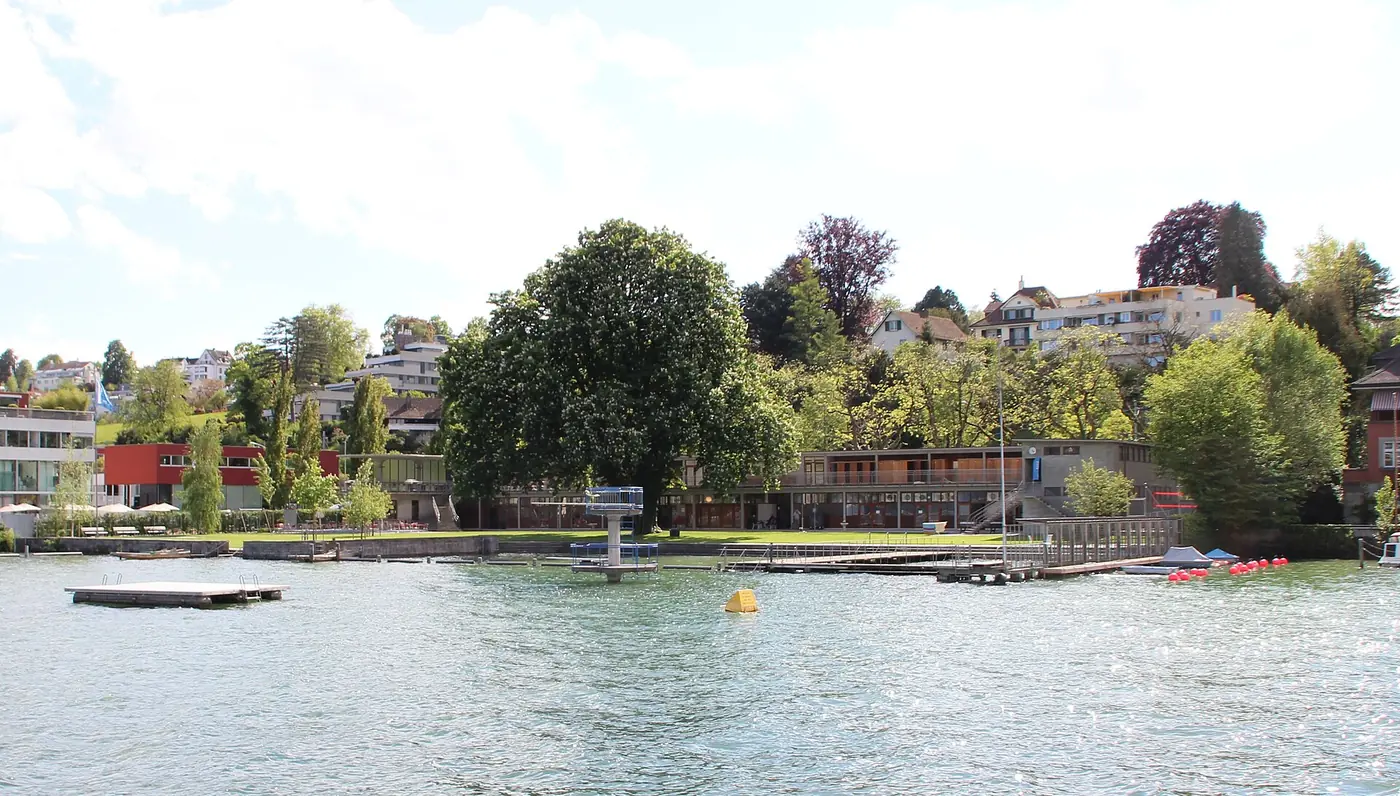
Kreis 2 has the lakeside walk in Enge, the summer baths Seebad Enge and Strandbad Mythenquai, Strandbad Wollishofen, Rieterpark with Museum Rietberg, and the PBZ Leimbach library. Check hours and seasons on the official websites.
RieterparkA public park in Enge, with lawns and Museum Rietberg. Access and information on the City website.
LakeLakeside walk along Mythenquai. In summer Seebad Enge, Mythenquai 9, Strandbad Mythenquai, Mythenquai 95 and Strandbad Wollishofen, Seestrasse 451 open. Hours and season on the official websites.
LibraryPBZ Pestalozzi-Bibliothek Leimbach, Rebenweg 6, 8041 Zürich: lending and reading spaces. Hours and services on the website, including during building work.
Communities, settling in, evenings out and social rules
To meet people, start with r/zurich, Meetup and InterNations, plus the language groups listed here. Visit the free Welcome Desk in the Stadthaus (Mon–Thu 13:00–17:00) and read your building's Hausordnung.
This part covers what comes after the first formalities: where to meet people, how to get around, what to do in the evening and which unwritten rules to respect. The same rule applies: event dates and venue names change, so always check the source.
Online communities by language
For everyone, whatever the language: Reddit is the most practical starting point, with r/zurich with its "Moving to Zurich" wiki and r/askswitzerland. Meetup has events almost every week (for example Zurich Together, "new in town" groups and expat clubs). InterNations has a Zurich community with subgroups by nationality: internations.org/zurich-expats. The old English Forum Switzerland (englishforum.ch) is no longer reachable; an English-language forum that is still active is Swiss Forum. Useful but unofficial directories: IAmExpat and Ron Orp (newsletter and noticeboard).
EnglishBeyond the shared platforms: Zurich Together, The Expats Club of Zurich, Zurich New in Town Social. Facebook groups such as "Expats in Zurich": to be verified.
PortugueseThe Portuguese group and the Portuguese-language mission listed by the St. Felix und Regula parish. The consulate in Zurich could not be reached at the time of checking: look for the official contact on the foreign ministry's website rather than using an unverified URL.
GreekThe InterNations Zurich group. For the consulate, the Greek foreign ministry page was not reachable when checked: no address is given until it can be verified.
PolishThe Polish group, the Polska Misja Katolicka Zürich (with a language school) and, for ETH students, the POLANA association. Facebook groups such as "Polacy w Zurychu": to be verified.
CzechNo stable group with a verified URL came up: search Meetup and Facebook for "Czechs / Češi v Curychu" (to be verified) and use the English- or German-language platforms.
RussianThe Russian group. Telegram chats and Facebook groups such as "Русские в Цюрихе": to be verified. Infodona also advises in Russian.
Telegram and WhatsAppThe groups exist, but invitations expire quickly. The safest route is to ask for a current link in an active Facebook or Meetup group, and to check who administers the chat before joining.
The City's official ERZ app for collection days and recycling points: ERZ app. It is not the generic "sauberes Zürich" app.
Priminfo: the official comparison of health insurance premiums.
deutschkurse-zh.ch: database of German courses, including co-funded ones.
Spontacts: leisure activities; decide for yourself whether it suits you.
First things to do, in order
Read the Hausordnung as soon as you arrive: laundry rota (Waschplan), quiet hours, guests, cellar. It prevents misunderstandings with neighbours.
Register your address (Anmeldung / Zuzug) within 14 days of actually arriving, in person and by appointment at Personenmeldeamt Zürich Süd, Stadthausquai 17. Municipal fee CHF 40.– per adult; cantonal permit fees vary, check them first (details in section 1).
Visit the Welcome Desk in the same building (Stadthaus, ground floor, room 18): free short consultations, no appointment, several languages, Mon–Thu 13:00–17:00, closed Friday, tel. +41 44 412 37 37. Welcome Desk
Swiss bank account and SIM: usually an ID document and an address, sometimes the registration confirmation. Conditions and documents vary by bank and provider: check directly.
Getting around: the whole city is zone 110, and passes use the "1–2 zones" fare. On 18.11.2026 the personal adult NetzPass, 2nd class, costs CHF 88.– per month and CHF 813.– per year; from the timetable change on 13.12.2026 it becomes CHF 91.– and CHF 840.– (ZVV announcement). Validate your ticket or pass before boarding. The SBB Halbtax is worth considering.
Bags and collection calendar: only official blue Züri-Sack bags and the ERZ app (section 6). Without the official bag, household waste is not collected.
Health insurance within 3 months of taking up residence: coverage and premiums are backdated if you meet the deadline. Compare on Priminfo; standard adult deductible CHF 300 per year (section 3).
Mail: after registering you usually receive your AHV number and the Serafe bill for the radio/TV licence. Amounts and rules on the official site: serafe.ch.
Children: school enrolment or a Kita place, and the City's Familienberatung, which is free from pregnancy to age 18 and is the new name of the Mütter- und Väterberatung.
Looking for a flat: you need the debt enforcement extract (Betreibungsregisterauszug), usually CHF 17.– plus postage, from the office for your district (section 10).
Within two weeks join a Meetup event or a neighbourhood evening: it is the simplest way to start meeting people.
Tips for settling in
GermanThe Welcome Desk helps you choose the right course. The City's database lists courses at every level, including intensive and evening courses, some co-funded by the municipality (deutschkurse-zh.ch). A free offer with no registration is the AOZ's "Deutsch an der Langstrasse": every Thursday 17:00–18:30, Langstrasse 200, for city residents who still speak little German (aoz.ch).
CostsWith the Caritas KulturLegi, co-funded City courses are reimbursed 100% after the course if you live in Zurich and attend at least 70% of it (kulturlegi.ch). Other providers, to assess on their own websites and not City offices: Volkshochschule Zürich (vhszh.ch) and Autonome Schule Zürich (bildung-fuer-alle.ch).
AdviceInfodona (Sihlamtsstrasse 6) offers free consultations by appointment for city residents on family, legal, financial, work and health questions; tel. +41 44 412 84 00. Languages change: confirm yours when booking.
Clubs, sport and neighbourhoodMuch of Zurich's social life runs through clubs: sport, music, culture, hiking. You can search them by neighbourhood on the City's website (sports club search); in Kreis 2 there are the Quartierverein Enge, the Quartierverein Zürich-Wollishofen and the Quartierverein Leimbach, with newcomer evenings when they are running. The universities' ASVZ is generally reserved for students and staff: do not assume it is open to everyone.
In Kreis 2 evening life centres mainly around Tessinerplatz and the lakeside walk in Enge: restaurants and bars, generally quieter than Langstrasse (Kreis 4) or Zürich-West (Kreis 5). Names and hours change: check on site.
HoursBy law venues close between midnight and 05:00 unless licensed; in the city exceptions usually run to 04:00 Sunday to Thursday and 05:00 on Friday and Saturday. At closing time service stops and you have 30 minutes to leave. Outdoor terraces and gardens usually close by midnight, often earlier. It is not true that Saturday closing is 06:00 as a rule (City rules).
Getting homeThe ZVV Nachtnetz runs on Friday–Saturday, Saturday–Sunday and before public holidays, roughly from 01:00; a valid ticket is enough and there is no night surcharge (zvv.ch/nachtnetz). On weeknights, after the last daytime service, there is normally none.
SummerThe public baths become meeting places: in Kreis 2, for example Seebad Enge, Strandbad Mythenquai and Strandbad Wollishofen. Admission and hours on the official site: summer baths.
PricesThere are no official rates. Only as a rough guide, to be verified: beer roughly CHF 6–9, cocktail roughly CHF 15–22, club entry roughly CHF 15–30.
Social rules, written and unwritten
Punctuality. Arriving on time is a form of respect; five unannounced minutes are noticed.
Greetings. In formal settings or with strangers: "Grüezi" and a handshake. Among peers "Hallo" or "Tschau" is fine. Kisses on the cheek are for friends and family, and the number (two or three) depends on the circle: to be verified. "Sie" remains usual with neighbours until they offer "du".
Quiet. Official City periods: on weekdays also 12:00–13:00; Sundays and public holidays all day; Nachtruhe 22:00–07:00, which starts at 23:00 on Fridays and Saturdays during daylight saving time. During these times no loud music, drilling, DIY or garden work, or loud voices in the courtyard. A washing machine on Sunday is not banned by an article that names it, but Sunday rest and the house rules often rule it out: follow the Waschplan and leave the machine and room clean (Alltagslärm).
Waste. Household waste only in the official blue Züri-Sack: the fee share is CHF 1.30 excl. VAT for the 35-litre bag (10 l CHF 0.37, 17 l CHF 0.63, 60 l CHF 2.22, 110 l CHF 4.07), and the shop price is higher. Paper every two weeks in tied bundles, cardboard weekly folded and tied, out before 07:00. Glass sorted by colour and metal at recycling points, Mon–Sat 07:00–20:00, never at night or on public holidays; blue and red glass goes with the green container, drinking glasses do not. PET is free at supermarkets (PET instructions).
Public transport. Speak quietly, music only through headphones, give up your seat, take your backpack off, stand on the right of escalators, validate your ticket before boarding.
Tipping. Since 1974 service has been included in the price. An extra (rounding up, or about 5–10% if you were really happy) is a voluntary courtesy, not an obligation: say the amount when paying. There is no official percentage (GastroSuisse).
Neighbours. Introducing yourself when you move in is appreciated. Respect corridors, courtyard and house rules. On Sundays shops are usually closed, with exceptions mainly at stations: check case by case.
In the Canton of Zurich the child allowance is CHF 215.– a month until age 12, then CHF 268.–, usually paid through your employer. The City's Familienberatung is free from pregnancy until age 18, and subsidised Kita places depend on income and assets. (as of 2026 · sources)
Family allowances (Familienzulagen)In the Canton of Zurich, employed parents usually receive family allowances through their employer or the employer's family compensation fund (Familienausgleichskasse). People who are not in employment can apply to the SVA Zurich. As a rule only one allowance is paid per child.
In the Canton of Zurich the child allowance (Kinderzulage) is CHF 215.– a month until the child's 12th birthday, then CHF 268.– a month until the end of the month in which the child turns 16. A training allowance (Ausbildungszulage) of CHF 268.– a month then replaces it: it starts with the beginning of training, but at the earliest in the month of the 15th birthday, and runs until training ends, at the latest the 25th birthday. Check the official websites for your situation (for example if a parent works in another canton).
Paediatrician (Kinderarzt / Kinderärztin)You will need a paediatrician for check-ups and when your child is ill. The City of Zurich publishes a list of paediatric practices (addresses and phone numbers). Check the current list on the City website, because practices open, close or stop taking new patients.
Parent and family counsellingThe City's Familienberatung (formerly called Mütter- und Väterberatung) is a free, confidential service for families, from pregnancy until children are 18. You can get advice by phone, in neighbourhood offices, at home or on a walk; group courses are also offered, and counselling is available in several languages. Check opening hours and how to get in touch on the official website.
Subsidised childcare (Kita)The City of Zurich does not use childcare vouchers (Betreuungsgutscheine). Instead, many municipal and private day-care centres and day-family services offer subsidised places: the City pays its share directly to the Kita, and you pay a reduced parental fee. You generally need to live in the City of Zurich, use a Kita that has a contract with the City, and obtain two confirmations (a contribution factor / Beitragsfaktor, and the subsidised care volume / SBU). The amount depends on income and assets. Check the conditions and apply on the City website.
School enrolmentKreis 2 belongs to Schulkreis Uto. Enrolment in kindergarten and primary school goes through the City's official channels; the exact school depends on your address. Details are in section 9. Check the current procedure on the City website.
Playgrounds and family offersThe City maintains public playgrounds across Zurich (Grün Stadt Zürich cares for around 700 play areas, including about 164 public playgrounds). An overview is on the City website. The Familienberatung and the City's early-childhood pages also list free group activities and other offers for families with young children. Check locations and current offers on the official websites.
Every household pays the Serafe radio and TV fee automatically: CHF 335.– in 2026 and CHF 312.– from 2027. Private liability and household contents insurance are optional, but landlords often require liability cover. (as of 2026 · sources)
Show all detailsHide details
Radio and TV fee (Serafe)Every private household pays a device-independent radio and TV fee, collected by Serafe. You do not need to register: Serafe receives the data from the residents' register. In 2026 the fee is CHF 335.– per year for a private household. From 1 January 2027 it falls to CHF 312.–, and from 1 January 2029 to CHF 300.– (amounts set by the Federal Council). Check the amount, any exemptions and your bill on the official websites.
Private liability and household contents insuranceCompulsory health insurance is covered in section 3. In addition, two optional private policies are very common:
Private liability insurance (Privathaftpflicht) covers damage you cause to other people or their property. It is not generally required by law (except in most cantons for dog owners), but landlords often require it in a tenancy.
Household contents insurance (Hausratversicherung) covers your furniture, clothes and other belongings against fire, water damage, storm and burglary, among other events. It is also optional; some landlords ask for it.
The two are often sold together, but they cover different risks. Compare offers and check what your rental contract requires.
Tax at source and the subsequent ordinary assessment (NOV)The basic rules of tax at source (Quellensteuer) are in section 11. In addition:
If your gross annual salary from employment is at least CHF 120'000.–, a subsequent ordinary assessment (nachträgliche ordentliche Veranlagung, NOV) is mandatory. The tax office usually starts this itself. If you arrived during the year, the salary is converted to a 12-month figure to test the threshold. For married couples the two salaries are not added together; the NOV applies if one spouse reaches CHF 120'000.–. Once it has applied, it continues in later years even if the salary later falls below the threshold.
A NOV is also mandatory if you have other income not taxed at source of at least CHF 3'000.–, or taxable assets of at least CHF 80'000.– (or CHF 160'000.– for jointly taxed spouses). In these cases you must apply yourself by 31 March of the following year. The deadline cannot be extended.
You may also apply voluntarily by 31 March of the following year if you want to claim deductible expenses that the withholding-tax tariff only partly covers — for example contributions to pillar 3a (Säule 3a) or costs of childcare by a third party (Drittbetreuung). The application is made electronically (ZHServices) and, once accepted, cannot be withdrawn; you will then receive a tax return each year.
If you obtain a C permit (Niederlassungsbewilligung), or you marry a Swiss citizen or C-permit holder living in Switzerland, tax at source ends from the following month and you are taxed in the ordinary procedure (you must file a tax return). Withholding tax already paid is credited. Check your situation on the canton's website.
Key first-year deadlines: register within 14 days, health insurance within 3 months, pillar 3a by 31 December, NOV application by 31 March, driving licence and car within 12 months. Put them in your calendar with the generator below. (as of 2026 · sources)
Show all detailsHide details
A checklist of official deadlines, roughly in the order they fall due. Always check the linked pages for your own situation — some rules depend on your nationality, permit or whether you arrived mid-year.
Within 14 days — register your addressIf you move to the City of Zurich from abroad, you must register (Anmeldung) at the Personenmeldeamt no later than 14 days after arrival. There has been no Kreis office for this since June 2023. Details are in section 1.
Within 3 months — compulsory health insuranceAnyone who takes up residence in Switzerland must take out compulsory health insurance (Grundversicherung) no later than three months after that date. If you join on time, cover starts retroactively from the day you took residence, and premiums are also due retroactively. If you join late, cover starts only from the joining date; an unexcused delay can also lead to a premium surcharge. More in section 3.
AHV numberNewcomers are generally assigned an AHV (social-security) number automatically once they are registered with the migration authority / have a residence permit. You do not need to apply. The number has 13 digits and starts with 756; you will usually find it on your health-insurance card. If you do not yet have a Swiss health-insurance card, ask your employer (if you work here), the cantonal compensation office, your commune, or your school if you are a student.
Serafe (radio and TV fee)The fee is collected automatically: Serafe receives your data from the residents' register, and you do not register yourself. The 2026 amount for a private household is CHF 335.–. See section 15.
By 31 December — pillar 3aIf you have earned income, you may pay into a pillar 3a account. For 2026 the maximum is CHF 7'258.– if you belong to a pension fund (2nd pillar), or 20% of your income up to CHF 36'288.– if you do not. The amount must be booked on the account by 31 December of the year you want the tax deduction for.
By 31 March — taxesIf a subsequent ordinary assessment (NOV) is mandatory for you, or you want to apply for a voluntary NOV (for example to deduct pillar 3a or childcare costs), the application must generally arrive by 31 March. That application deadline cannot be extended. Other tax-return filing deadlines are different and may sometimes be extended — ask the tax office. Details are in section 11 and section 15.
Within 12 months of entry — driving licenceConvert your foreign driving licence into a Swiss one within 12 months of your date of entry. After that you may not drive in Switzerland until the conversion is done. Fees, country lists and documents: section 18.
Within 12 months of the move — carIf you brought a motor vehicle, complete the customs formalities and have it registered in Switzerland. Swiss registration is in principle required no later than one year after you move your residence. In the Canton of Zurich a technical vehicle test (Fahrzeugprüfung) is part of registration. See section 17 and section 18.
Permit renewalIn the City of Zurich you may file a renewal application at the earliest three months and at the latest 14 days before your foreigner's permit (Ausländerausweis) expires. The State Secretariat for Migration (SEM) usually sends the form two to three months beforehand (for some permit types the city sends it about one month before). Book an appointment at Personenmeldeamt Zürich Nord or Zürich West (city residents only). The fee depends on your nationality and permit type and is paid at the appointment.
Bring with you (permit renewal)The exact list depends on the permit type; check the city page before you go. Typically:
the completed renewal form (Verfallsanzeige);
passport or ID (third-country nationals: a valid passport is required);
students: confirmation of enrolment;
if you are employed and hold an L, B, F or S permit: the form also completed and signed by your employer (not required if you are married to a Swiss citizen);
the fee, paid at the appointment.
If the next available appointment is after the 14-day deadline, the city still asks you to book the earliest slot and request an extension via its contact form.
Used household goods can usually be imported duty-free with form 18.44 if you have used them for at least 6 months. Since 2025 the VAT-free allowance is CHF 150.– per person per day; dogs, cats and ferrets need a microchip, a rabies vaccination and a pet passport. (as of 2026 · sources)
Show all detailsHide details
Household goods (form 18.44)If you move your residence to Switzerland, used household goods can usually be imported duty-free. You present the completed form 18.44 (customs assessment of removal goods) at a customs office that handles commercial goods, during its opening hours. The main conditions are:
you are transferring your residence to Switzerland;
the goods have been used by you personally for at least 6 months and you will continue to use them;
they are imported in connection with the move; within a period of 2 years this is generally unproblematic (the 6-month use condition must still be met);
you provide an inventory list and proof of the move.
The inventory can be a simple list (for example “xx boxes of books”). Valuable items and goods subject to restrictions (alcohol, weapons, and so on) must be listed separately and in more detail. Goods that do not meet the 6-month rule should be listed apart as goods to be cleared, with their value. Later shipments must already be declared, on a separate list, at the first import. People moving from an EU or EFTA state do not need a promise of a residence permit; a work contract, rental contract and deregistration in the country you leave can prove the move.
Bring with you (household goods)
completed and signed form 18.44;
inventory list;
proof of the residence move (for example work contract, rental contract, deregistration);
identity document;
for goods that are not duty-free: a separate list with values and, if possible, receipts.
CarsA vehicle must be declared when it is brought in. If it has been used personally for at least 6 months and meets the removal-goods conditions, it can be admitted duty-free under form 18.44. Customs then issues form 13.20 A as proof of clearance for the cantonal registration office (issuing this proof costs CHF 20.–). If the vehicle has been used for less than 6 months, you may apply for a customs permit on form 15.30: the vehicle may then be used uncleared for up to 2 years from your first day of entry; after that it must be cleared (duties, automobile tax and VAT) or taken out of the country again. In any case, Swiss registration is in principle required no later than one year after you move your residence — ask the cantonal road traffic office for the details.
If the vehicle does not qualify as removal goods, import charges apply: an automobile tax of 4% of the vehicle's value and import VAT of 8.1%. The VAT is calculated on the price (or market value), plus costs up to the destination in Switzerland and including the automobile tax. Additional CO2 rules can apply to newer vehicles; check the Federal Office of Energy and ASTRA. The registration steps in Zurich, including the technical test, are in section 18.
Bring with you (car at customs)
invoice and/or purchase contract;
foreign vehicle registration document;
identity document;
the relevant customs form (18.44 and/or 15.30);
any other papers the customs office asks for (for example an import declaration).
PetsDogs, cats and ferrets generally need a microchip (implanted before the rabies vaccination), a valid rabies vaccination (the first vaccination is possible from 12 weeks of age and is valid only 21 days later) and a recognised pet passport — or, for a first entry from a third country, the official veterinary certificate. Extra rules apply when you arrive from a country with a rabies risk (antibody test, waiting periods; a BLV permit is also required for some arrivals by air). The import of dogs with cropped ears or tails is prohibited. After you import a dog, a veterinarian in Switzerland must check the chip and have it registered in the AMICUS database within 10 days. Use the official BLV travel check for your route; at most five pets may travel in one private vehicle under the pet rules.
Bring with you (pets)
pet passport or veterinary certificate, as required for your route;
proof of microchip and rabies vaccination;
any extra documents for arrivals from a rabies-risk country (including a BLV permit where required);
after arrival with a dog: an appointment with a Swiss vet for the AMICUS check.
VAT allowance and duty-free quantitiesSince 1 January 2025 you may import goods for your own private use or as gifts up to a total value of CHF 150.– per person per day (including children) without import VAT. The allowance can be used only once a day. If the total value exceeds CHF 150.–, VAT is due on the entire value, not only on the excess. A single item worth more than CHF 150.– is always subject to VAT, regardless of how many people are travelling. In addition, duty-free quantity limits apply per person per day, including:
1 kg of meat and meat preparations (except game); animal products may be imported only from EU states, Iceland, Northern Ireland and Norway;
5 litres of alcoholic drinks of up to 18% vol. and 1 litre of drinks over 18% vol.;
250 cigarettes or cigars, or 250 g of other tobacco, or 250 ml of nicotine-containing e-liquid, or 25 disposable e-cigarettes.
Always check the official BAZG table: other foodstuffs (for example butter, oils) have their own limits, and further restrictions can apply. The official QuickZoll app can calculate and pay charges.
Exchange a foreign driving licence within 12 months of entry; licences from EU/EFTA countries and some others, such as the USA, Canada and Japan, need no control drive (CHF 134.– where it is required). A foreign car needs customs form 13.20 A and a technical test before Swiss registration. (as of 2026 · sources)
Show all detailsHide details
Foreign driving licenceYou have 12 months from your date of entry to exchange a foreign driving licence for a Swiss one. After 12 months you may not drive in Switzerland until the exchange is complete. Whether you need a control drive (Kontrollfahrt) depends on the country that issued your licence (official list of the Canton of Zurich):
No control drive and no additional theory test: Belgium, Bulgaria, Denmark, Germany, Estonia, Finland, France, Greece, United Kingdom, Ireland, Iceland, Italy, Croatia, Latvia, Liechtenstein, Lithuania, Luxembourg, Malta, Netherlands, Norway, Austria, Poland, Portugal, Romania, Sweden, Slovakia, Slovenia, Spain, Czech Republic, Hungary and Cyprus.
No control drive (and no additional theory test for category B, cars): Andorra, Australia, Israel, Japan, Canada, Republic of Korea, Morocco, Monaco, New Zealand, San Marino, Singapore, Taiwan (categories A1 and B only), Tunisia, United States. An additional theory test may be required if you also want to keep categories C or D (and some sub-categories) or a professional passenger-transport entitlement.
Control drive required: licences from any other country. The control drive is similar to a driving test. You may take it only once: if you pass, you receive a Swiss licence; if you fail, you may no longer drive in Switzerland and must obtain a Swiss licence from scratch. The fee for categories A, A1, B, B1 and several others is CHF 134.– (cantonal fee ordinance from 1 January 2026). A driving school is recommended.
Other cantonal fees from 1 January 2026: identity check CHF 20.–, conversion (Umschreibung) CHF 50.–, Swiss licence document CHF 40.–. City of Zurich residents can have the identity check done at the Personenmeldeamt (CHF 20.–, paid there), which forwards the file, or at a cantonal road traffic office (Strassenverkehrsamt). If no control drive is required, the Swiss licence is usually posted within 10–14 working days.
Bring with you (licence conversion)According to the City of Zurich and the cantonal road traffic office:
the completed form “Gesuch für Umtausch eines ausländischen Führerausweises”, including a Swiss eye test (valid for 2 years);
a current passport photo on photo paper (a scan or a home print is not accepted);
your identity card or passport in the original;
if you are a foreign national: your residence permit in the original;
your foreign driving licence in the original;
if the licence is not in Latin script: a translation issued by a consulate or embassy in Switzerland;
if the licence has been lost: a Swiss police loss report and a confirmation from the foreign authority.
Registering a foreign carAfter customs clearance (form 13.20 A), you apply to the cantonal road traffic office. In Zurich a technical vehicle test (Fahrzeugprüfung) is required; the office decides after the test whether the vehicle can be registered. You also need Swiss motor third-party insurance; the insurer sends the proof electronically (it is valid for 30 days). After a pass, you must surrender the foreign plates on the spot — bring tools to remove them. If the vehicle is insured, you may drive without plates on the direct way to the test. Swiss registration is in principle due no later than one year after you move your residence.
Bring with you (car registration / test)
customs form 13.20 A (or a printout of the digital proof);
foreign vehicle documents (copies first, originals at the test);
Swiss motor insurance arranged in time;
the vehicle handbook and, if required, the exhaust-maintenance document;
if you do not yet have a Swiss driving licence: a residence confirmation from your commune may also be required;
tools to remove the foreign plates after a pass.
Recognition of diplomasForeign professional qualifications are assessed by the State Secretariat for Education, Research and Innovation (SERI / SBFI) or by another competent body, depending on the profession (see anerkennung.swiss). For applications at SERI, a level confirmation (Niveaubestätigung) for a non-regulated profession costs CHF 350.–; recognition of a regulated profession costs CHF 550.–. Processing often takes several months (SERI currently indicates around 4 months for regulated professions and up to 10 months for a level confirmation; delays are possible). University medical professions (for example doctors) are handled by the Medical Professions Commission MEBEKO at the Federal Office of Public Health (FOPH / BAG), not by SERI. Check the official BAG/MEBEKO pages for the procedure and the current fees.
Bring with you (diplomas)The exact file depends on the profession and the competent body. Typically you will need the diploma and transcripts, an identity document, and any translation or apostille required by the official portal. Check the competent body before you apply.
Housing is the city's biggest problem: 56% named it in the 2025 survey, and only 252 flats (0.11%) were empty on 1 June 2026. Send a complete application dossier in German, and in a dispute contact the Mieterverband or the Schlichtungsbehörde. (sources)
Show all detailsHide details
This page is general information, not legal advice. For a tenancy dispute, contact the conciliation authority (Schlichtungsbehörde) at the district court or the Zurich Tenants' Association (Mieterverband Zürich). Always check the official pages for your own situation.
Housing comes firstIn the City of Zurich's 2025 population survey, 56% of respondents named housing (shortage, high rents, difficulty finding a suitable flat) as the city's biggest problem — for the first time ahead of traffic, with the cost of living in third place. On 1 June 2026 the official vacancy count was 252 empty flats, a vacancy rate of 0.11% of the housing stock. That figure is a snapshot of flats that were neither let nor sold on that day; the City notes that around 2'000 flats come onto the market in Zurich each month, most of them re-let immediately after someone moves out. Basic rules on the deposit and the debt-enforcement extract are in section 10.
A complete German application dossierLandlords commonly ask for a complete file, usually in German. This is not a list required by law, but incomplete applications are often set aside. Typical documents, according to the City and the Tenants' Association:
a completed application form, if the landlord provides one;
a copy of your ID or residence permit;
proof of income or employment (for example a salary statement or employment contract);
a current Betreibungsregisterauszug (debt-enforcement extract) — in the City of Zurich a standard extract costs CHF 17.– plus postage; a City information sheet recommends that it should not be older than three months (details in section 10);
references (for example a previous landlord); tell the people you name before you list them. The landlord may only contact the referees you have given.
Never pay a deposit or a fee to an unknown person before you have seen the flat and signed a contract. The deposit for housing may not exceed three months' rent and must go into a blocked account in the tenant's name (section 10).
Official and non-profit help with housing
Mieterverband Zürich advises on tenancy law (appointment needed, about 20 minutes, bring your contract and correspondence). Advice is free for members; for non-members it costs CHF 70.– including VAT (check the current amount on their website).
Schlichtungsbehörde (conciliation authority in tenancy and lease matters) at the district court of the place where the flat is located — not the Friedensrichteramt. In the Canton of Zurich each district court has a specialised, jointly composed conciliation authority. You can file a request, for example, to contest a notice or a rent increase. Information is on the official courts website.
City and non-profit housing: the City lets its own flats according to published rules (occupancy, income and assets, residence requirement, social mix, urgency). Housing cooperatives (Baugenossenschaften) and city foundations also offer non-profit (gemeinnützige) flats, often below market rents; applying usually takes time and patience. Over 55'000 non-profit flats exist in the city. Current listings and the City's overview of cooperatives are on the official websites.
High costs, traffic, bureaucracyThe same 2025 survey placed traffic second and the cost of living third among the problems named most often. For everyday bills, insurance and taxes see section 15 and section 11; for getting around, section 5; for registration, permits and first-year deadlines, sections 1, 2 and 16.
Language, integration and lonelinessThe City's Welcome Desk in the Stadthaus offers free information and short advice for newcomers, without an appointment (the desk is run by the specialised office for diversity, integration and anti-racism, formerly Integrationsförderung; check opening hours on the official page, currently Monday to Thursday 13:00–17:00). The same office points you to German courses: a free online course database lists classes in the city, including some co-funded by the City; with a KulturLegi, course fees at those providers can be reimbursed (conditions on the official page). To meet people, the City lists neighbourhood and community centres and multicultural meeting points (Treffpunkte) with leisure and cultural activities. Everyday neighbourhood life is also in section 12 and section 13.
Work for a partner who moved with youOfficial guidance on looking for a job in Switzerland is on ch.ch (application file, CV, interviews) and on the public employment portal arbeit.swiss, which also directs you to the regional employment centre (RAV) in your area. Whether you can register as unemployed depends on your situation — check the official pages. Recognition of foreign diplomas is in section 18.
Childcare and schoolsKindergarten, schools, Kita places and family counselling (Familienberatung) are covered in section 9 and section 14.
Problems in a current tenancy, noise and neglected public spaceIf a dispute has already started (rent increase, notice, repairs, service charges), contact the Mieterverband or the Schlichtungsbehörde; do not delay, because some challenges have short deadlines (often 30 days). For noise from a neighbour, the City first recommends speaking to them, then informing the landlord or management. Night-time quiet is generally 22:00–07:00 (in summer, from 23:00 on Friday and Saturday). The police (117) can take a noise complaint; response times vary. Noise from fixed technical installations can be raised with the City's environment and health protection office during office hours. Defects in public infrastructure (streets, lighting, parks, playgrounds, graffiti and so on) can be reported on the City's free platform Züri wie neu. That platform is not for private tenancy defects.
Within 14 days of actually arriving, in person and by appointment at Personenmeldeamt Zürich Süd, Stadthausquai 17, 8001 Zürich. The municipal fee is CHF 40.– per adult.
as of 2026 · Details and official sources: section 1
When do I need Swiss health insurance?
Within 3 months of taking up residence. If you meet the deadline, cover and premiums are backdated to your arrival; compare premiums on the official Priminfo tool.
What goes into a flat application dossier in Zurich?
Usually a short cover letter in German, a copy of your ID or permit, proof of income, a current Betreibungsregisterauszug (CHF 17.– plus postage in the City of Zurich) and references.
as of 2026 · Details and official sources: section 10
How long can I drive with a foreign driving licence?
You must exchange it within 12 months of your date of entry; after that you may not drive until the exchange is done. Whether you need a control drive (CHF 134.–) depends on the issuing country.
as of 2026 · Details and official sources: section 18
Can I bring my household goods duty-free?
Usually yes, with form 18.44, if you have used the goods personally for at least 6 months and import them in connection with your move, with an inventory list and proof of the move.
144 ambulance, 117 police, 118 fire brigade, 112 European emergency number, 145 Tox Info and 1414 Rega. For out-of-hours medical advice: Aerztefon 0800 33 66 55.
All links were checked on 18.11.2026 and open in a new tab. Sources for section 13 are linked in the text. Sources for sections 14 to 19 are listed below and in the sections.
General information. This independent guide and its templates are for information only and do not constitute individual legal, tax or insurance advice. Information can change, and how it applies depends on your personal situation. Before you act, check deadlines, requirements and amounts with the competent authority or recipient. The calendar reminders are a guide and do not replace that check.
This website is not affiliated with or endorsed by the City of Zurich, the Canton of Zurich or the Swiss Confederation. Content may be out of date: the official source always prevails. Links marked ↗ lead to external websites with their own rules.
Information last checked: 18 November 2026, against the official sources listed in each section.